Here at Monti, we don’t see training our manufacturing workforce as an event. We see it as an investment in people.
Manufacturing companies invest heavily in equipment, technology and capacity. But none of those investments reach their full potential without skilled, confident employees who understand not only what to do, but why it matters.
That is why training cannot be limited to new-hire orientation or learning a single job. New employees need a strong foundation, but experienced employees also need opportunities to sharpen their skills, prepare for new technology and grow into leadership roles.
At Monti, we believe developing our current workforce is just as important as recruiting the next generation of manufacturing talent.
Growth Created a Need to Level Up Our Training
Over the past decade, Monti has continued to grow in size, capability and geographic reach. With that growth came a clear need to take our approach to training to the next level. That commitment took a major step forward when we hired Chris Wilke to lead our corporate training efforts.
Chris joined Monti with extensive experience in education, career development and skills-based learning. His approach emphasizes collaboration, shared ownership, innovative thinking and clearly defined processes that lead to measurable results.
He understands how people learn, how to build effective programs, and how to unite people around a common purpose.
The Real Challenge: Learning Monti Manufacturing
The hard part? Learning manufacturing. More specifically, learning Monti manufacturing.
Our operations include specialized processes, different equipment, customer-specific requirements and decades of knowledge held by employees across multiple locations. Much of that knowledge has traditionally been passed from one experienced employee to another. Capturing it, organizing it and turning it into consistent training requires more than creating a presentation or writing a procedure.
It requires spending time on the floor.
It means asking questions, listening to the people who do the work, and respecting their hard-earned experience.
Above all, it means recognizing that the subject-matter experts already work inside the organization.
Chris embraced that challenge. He worked alongside our leaders, supervisors and experienced employees to learn our processes and begin transforming operational knowledge into training that can be taught, measured and repeated.
Rolling Out Train-the-Trainer in South Carolina
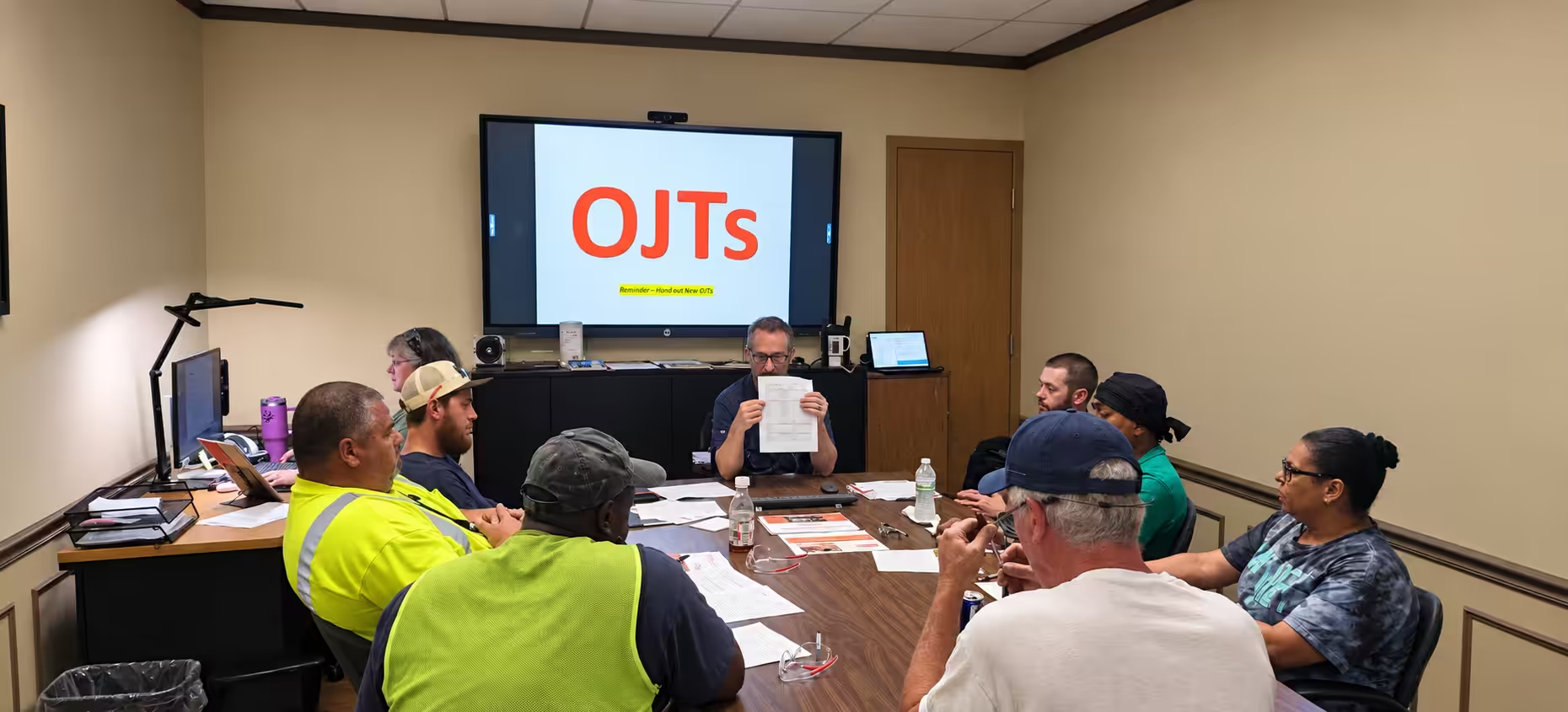
And now, here we are in South Carolina rolling out train-the-trainer courses.
That moment represents much more than a new class.
Train-the-trainer creates a multiplier effect. Rather than letting knowledge rest with one person, we are developing employees who can confidently teach others. Informal explanations that vary by shift or location give way to greater consistency. And training shifts from something owned by one department to a shared responsibility across the organization.
Why Training the Trainer Matters
The goal of our approach to manufacturing workforce training is not to replace the knowledge of our experienced employees. It is to recognize its value, strengthen it and make sure it is carried forward.
That matters for new employees who deserve a clear and welcoming path to competence. It matters for current employees who want to expand their skills and pursue new opportunities. It matters for supervisors who need the tools to coach effectively. And it matters for Monti as we continue investing in new equipment, new capabilities and new facilities.
A strong training culture tells employees: We are invested in your success. Your knowledge matters. Your development does not stop once you learn your first job.
We still have plenty of work ahead, but seeing these courses reach our South Carolina operations is an important milestone. It reflects the contributions of Chris and the many Monti employees who have shared their time, knowledge and experience to help others succeed.
Machines create capacity. People create capability. The future of manufacturing depends on our willingness to develop both.