Learn what electroplating is, how the process works, and why industries rely on it for improved conductivity, corrosion resistance, and performance.
If you’ve ever wondered how a copper busbar gets its protective silver coating, or why certain electrical components resist corrosion better than others, the answer is electroplating.
Electroplating is the process of using electrical current to deposit a thin layer of metal onto another material’s surface. It’s not just about aesthetics—electroplating enhances conductivity, prevents corrosion, improves solderability, and extends component lifespan in demanding applications.
Whether you’re in electrical manufacturing, automotive, aerospace, or electronics, understanding electroplating helps you make smarter material choices for performance-critical parts.
In this guide, we’ll break down:
- What electroplating is (in plain English)
- How the electroplating process actually works
- Common metals used and their applications
- Why industries choose electroplating over alternatives
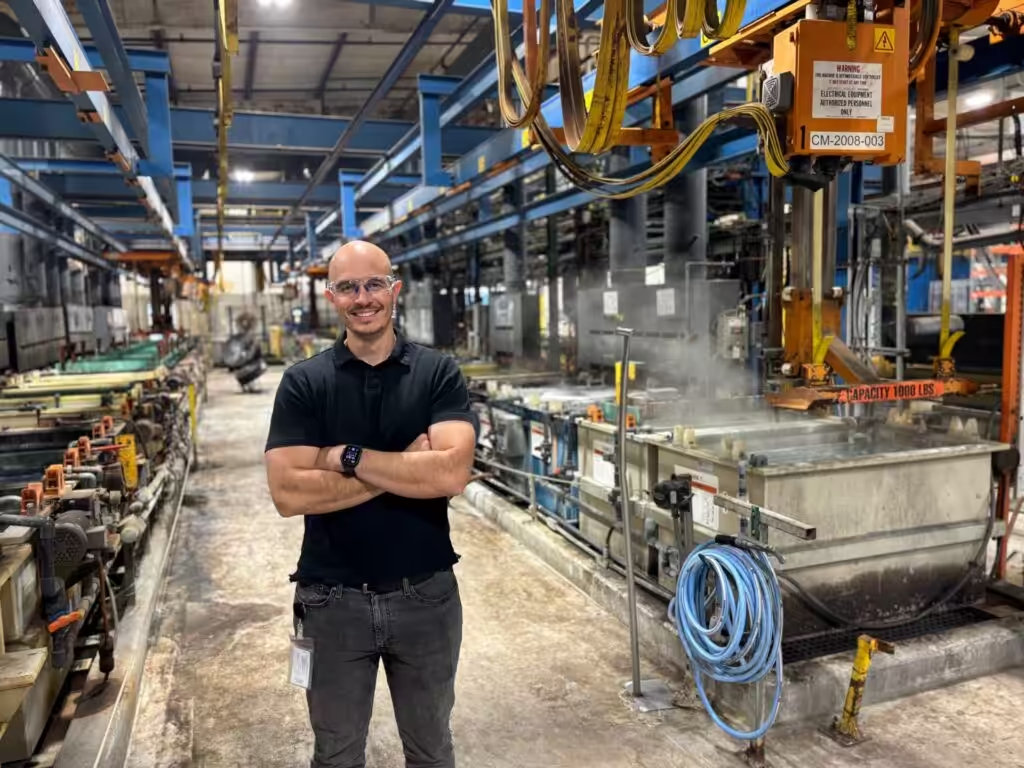
Leading Compliance in Electroplating
As Director of Plating Operations, Joel Perrine oversees Monti Inc.’s Electroplating Department, ensuring adherence to industry standards. With 19 years of expertise, he streamlines production for manufacturers, cutting lead times by up to 30% while enhancing electrical component reliability. “Our goal? Seamless electroplating so you focus on innovation.” Connect with Joel for insights on optimizing your plating workflows.
What Is Electroplating?
Electroplating is an electrochemical process that deposits a thin metal coating onto a conductive surface using electrical current. The result? A component with enhanced properties—better conductivity, corrosion resistance, or durability—without changing its core structure.
Think of it like this: You have a copper part that needs protection from corrosion and improved electrical performance. Instead of replacing it with an expensive solid silver component, you electroplate a thin silver layer onto the copper surface. You get the benefits of silver where it matters most—on the surface—at a fraction of the cost.
Common Applications:
- Electrical contacts and connectors
- Copper busbars for power distribution
- Automotive electrical systems
- Fasteners and industrial hardware
- Electronics manufacturing (PCBs, terminals)

The electroplating circuit: Anode (metal source), cathode (part being plated), and electrolyte solution containing metal ions
How Does Electroplating Work? The Science Made Simple
At its core, electroplating relies on reduction and oxidation reactions (redox chemistry) driven by electrical current.
The Basic Setup:
1. The Anode (Positive Terminal)
- Made of the metal you want to deposit (e.g., silver, tin, zinc)
- Connected to the positive side of a power source
- During the process, metal atoms at the anode lose electrons (oxidation) and dissolve into the plating solution as positively charged ions
2. The Cathode (Negative Terminal)
- This is your part—the component being plated
- Connected to the negative side of the power source
- Metal ions from the solution are attracted to the cathode, where they gain electrons (reduction) and deposit as a solid metal layer
3. The Electrolyte Solution
- A liquid bath containing dissolved metal ions (matching the anode metal)
- Acts as the medium that allows ions to travel from anode to cathode
- Carefully controlled for pH, temperature, and concentration to ensure uniform coating
The Process in Action:
- Setup: The component (cathode) and metal anode are submerged in the electrolyte solution
- Current Applied: DC power flows through the circuit
- Oxidation at Anode: Metal atoms lose electrons and become positively charged ions (M → M⁺ + e⁻)
- Ion Migration: Positive metal ions move through the solution toward the negatively charged cathode
- Reduction at Cathode: Ions gain electrons and deposit as solid metal onto the component surface (M⁺ + e⁻ → M)
- Result: A uniform metal coating bonded to the substrate
Pro Tip: The coating thickness is controlled by adjusting current density and plating time. More current or longer plating = thicker coating.
Key Factors That Affect Electroplating Quality
Not all electroplating is created equal. Several variables determine the final coating’s quality:
Current Density
- Too high = rough, uneven coating or burning
- Too low = poor adhesion, thin spots
- Sweet spot = uniform, adherent layer
Solution Chemistry
- pH levels must be tightly controlled
- Metal ion concentration affects deposition rate
- Additives (brighteners, levelers) improve finish quality
Temperature
- Affects reaction speed and coating characteristics
- Each metal has an optimal plating temperature range
Plating Time
- Determines final coating thickness
- Must be calibrated based on desired specs
Surface Preparation
- Parts must be thoroughly cleaned (degreased, etched) before plating
- Poor prep = poor adhesion and coating failure
At Plating Solutions, we maintain rigorous process controls across all these variables to ensure consistent, high-quality results that meet or exceed industry standards.
Common Electroplating Metals and Their Uses
Different metals offer different benefits. Here are the three most common options:
Silver Electroplating
Why Silver?
- Highest electrical conductivity of any metal
- Excellent thermal conductivity
- Superior solderability
- Strong corrosion resistance (with proper underplating)
Common Applications:
- Electrical contacts and bus bars
- High-frequency electronics
- Copper stabs and fingers
- RF/microwave components
Learn more about our silver plating services →
Tin Electroplating
Why Tin?
- Excellent corrosion protection
- Non-toxic and RoHS compliant (lead-free)
- Superior solderability for electronics
- Ductile—won’t crack during forming
Common Applications:
- Electrical terminals and contacts
- PCB components
- EV battery systems
- Automotive electrical connections
Learn more about our tin plating services →
Zinc Electroplating
Why Zinc?
- Cost-effective corrosion protection
- Sacrificial coating (corrodes before base metal)
- Versatile chromate options for added protection
- Excellent base for powder coating
Common Applications:
- Automotive brackets and fasteners
- Industrial hardware
- Construction materials
- Agricultural equipment
- Electrical enclosures
Learn more about our zinc plating services →
Electroplating vs. Other Coating Methods
How does electroplating compare to alternatives?
| Method | Pros | Cons | Best For |
| Electroplating | Precise thickness control, excellent adhesion, uniform coverage | Requires conductive substrate | High-performance electrical/electronic components |
| Electroless Plating | Works on non-conductive surfaces | Slower, more expensive | Complex geometries, plastics |
| PVD (Physical Vapor Deposition) | Ultra-thin coatings, decorative finishes | Expensive equipment, limited thickness | High-end decorative applications |
| Powder Coating | Thick, durable finish | No electrical/thermal benefits | Aesthetic and environmental protection |
Bottom line: For electrical conductivity, thermal performance, and precision coating thickness on metal components, electroplating is the gold standard.
Why Monti Brought Electroplating In-House
In 2011, Monti took a bold step: we established Plating Solutions to bring electroplating capabilities in-house.
Why?
- Supply chain control: No more delays or quality inconsistencies from third-party platers
- Quality assurance: Direct oversight of every step in the plating process
- Speed to market: Faster turnaround times for customers
- Scalability: Two silver plating lines and capacity to grow with customer demand
This vertical integration means our customers get:
- Consistent quality across every batch
- Faster lead times
- Direct communication with our plating engineers
- Confidence that their components meet exact specifications
Our focus on silver, tin, and zinc plating for copper busbars and electrical components reflects our commitment to the electrical industry’s most demanding applications.
Learn more about Plating Solutions →
FAQ: Electroplating 101
What metals can be electroplated?
Common metals include silver, gold, nickel, copper, tin, zinc, and chromium. The choice depends on the desired properties (conductivity, corrosion resistance, aesthetics, etc.).
Can non-metals be electroplated?
Not directly. The substrate must be conductive. However, non-conductive materials (like plastics) can be treated with conductive coatings first, then electroplated using electroless methods.
How thick is an electroplated coating?
Typically between 0.0001″ to 0.005″ (2.5 to 125 microns), depending on application requirements. Thicker coatings offer more protection but cost more.
Is electroplating environmentally friendly?
Modern electroplating facilities use closed-loop systems, wastewater treatment, and RoHS-compliant processes to minimize environmental impact. At Plating Solutions, we prioritize sustainability in all our operations.
How long does electroplate coating last?
Depends on the metal, thickness, and operating environment. Properly applied coatings can last decades in normal conditions. Silver and tin coatings are particularly durable in electrical applications.
What’s the difference between bright and matte finishes in tin?
This is controlled by solution additives and current density. Bright finishes are achieved with leveling agents and brighteners; matte finishes result from lower current densities or specific bath chemistries.
Ready to Enhance Your Component Performance?
Now that you understand how electroplating works and why it matters, the next step is finding a partner who can deliver consistent, high-quality results.
At Plating Solutions, we bring decades of expertise to every project—from prototype to high-volume production. Whether you need silver plating for maximum conductivity, tin for superior solderability, or zinc for cost-effective corrosion protection, we have the capabilities and technical knowledge to meet your exact specifications.
What sets us apart:
- In-house plating capabilities (no third-party delays)
- Rigorous process controls and quality testing
- Both barrel and rack plating options
- Industry expertise across electrical, automotive, and industrial applications
- Commitment to sustainability and RoHS compliance
Contact us today to discuss your electroplating requirements and discover how our expert solutions can enhance your component performance.